July 22, 2026: Cyclospora vs. Swimming Pools & Splash Pads
Good Morning,
Based on conversations about Cyclospora from contaminated iceberg lettuce (and the confusing back & forth on who is to blame) I thought this would be a good week to talk about the basics of sanitation and what pool water does and does not disinfect.
For the purposes of this conversation, a swimming pool, hot tub, spray park/splash pad, water slide with receiving basin, cold plunge, lazy river, etc. are all a "pool." It's a recirculating system of recreational water powered by electricity with chemicals, filters, automated control systems, etc. it's just the volume of water, facility size, age, appearance and type that are different.
It has been my experience as a lifeguard on deck for thousands of hours, interacting with guests, that the average lay person truly believes that the level of free available chlorine (FAC or FC) residual disinfectant in the pool water is enough to "nuke" common germs such as the flu, and even worse contaminants such as head lice, COVID-19, chicken pox, hand foot & mouth disease, etc.
When speaking to anyone, I like to make the comparison to tap water. Your city might treat the tap water with 0.5 parts per million (ppm is in a US Gallon) or milligrams per liter (mg/L) of chlorine to create a residual disinfectant for the water to flow city pipes and arrive at the faucet in your kitchen. If you go away for the weekend, when you go to fill the kettle on Monday morning, the drinking water that's been sitting in your pipes is still safe to consume; this is the miracle of modern sanitation.
If your pool water chlorine is maintained at a FAC of 2ppm, that's only 4x higher than drinking water. Yes, it IS higher, but we would never expect the low amount of chlorine (disinfectant) in tap water to inactivate, say, human waste in a toilet, so why do we think a slightly higher amount of disinfectant in the pool is sufficient against the same contaminant? It's not killing anything instantly on contact.
Even something as simple as adenovirus, causing conjunctivitis (pink eye) I got from my own, correctly maintained commercial swimming pool because my continuous exposure for 30 minutes while teaching a preschool swim lesson was not enough contact time (CT value) to kill the germs. The low concentration residual could kill the germs, but depending on factors like temp & pH it might take up to 11 minutes.
Also: neither tap nor pool water is inherently sterile. We don't use tap water to insert contact lenses, make baby formula, or disinfect medical tools in a hospital. If you are averagely healthy, pool water probably has enough (additional) residual disinfectant to inactivate (not all germs are 'alive') most normal germs on the human body - think sweat, urine, sunscreen, makeup products, etc. - so you can enjoy a public aquatic facility.
However, if you are higher risk (think senior citizen or cancer patient), the level of germs in the pool water may be too much for your compromised immune system. Further, if you've had a recent surgery, piercing, new tattoo, stitches, or substantial scrape (think road rash on knees & elbows after a bike crash), the water is not sufficiently safe to enter with open tissue. There is no "waterproof" bandage in the world that's effective enough against continuous submersion while swimming.
This is literally how a swimming pool works: we as operators are attempting to balance a minimum level of residual disinfectant, required by the jurisdiction and bather load, with not using a level that's so high that it might kill all germs on contact, but it's hazardous to human health. (BTW this is a surprisingly good article on this topic.)
That's why it's so important we educate our customers about public health policies that supersede even our facility policies during an outbreak like Cyclospora. I think the conversation about lettuce is a great opportunity to gently reinforce the need to refrain from using the pool for 72+ hours since your last symptom of any major illness, not just diarrhea.
Further, it's important we also reinforce these statements with actual policies that support & promote compliance like credits for missed swim lessons, refunds for drop-in admissions, extending membership passes for absences, and refunding hotels you prepaid for a family staycation. Yes, I understand all of these things cost money (lost revenue), but the savings is not having an extended pool closure for everyone in the middle of the summer or any high revenue period, or being named as the site of an outbreak.
To bring it back to iceberg lettuce: yes, unsurprisingly the bacteria Cyclospora will need a lot more time to be killed by low levels of chlorine. Unlike some posts I saw online this week, it's not being hysterical to write headlines like this: Cyclospora’s chlorine resistance raises concerns about pools, splash pads amid nearly 400 Ohio cases. It's the truth, and we do need to talk/think about how it impacts aquatic operations.
In my personal opinion, if you are in an area with documented exposure - like Ohio (above) or Maricopa County, AZ - it could absolutely make sense to close aquatic facilities where you can't substantially increase the FAC safely. I also think an added layer for everyone is increasing education by stationing a staff member/attendant on the deck to do real, on-the-spot education.
Remember during COVID when we had screeners at facility entry points? I'm not saying you can screen anyone for Cyclospora, but a good lifeguard or customer service rep can engage customers in purposeful conversation with a free resource like What's in Your Cannonball? from the CDC Healthy Swimming website; it's also an excellent resource for your next team toolbox talk.
If any of this information was interesting to you, this is exactly how I teach the Pool & Hot Tub Alliance (PHTA) Certified Pool Operator (CPO) class in terms of breaking down the mechanics of how the pool system actually works.
It's National Drowning Prevention Week (NDPW).
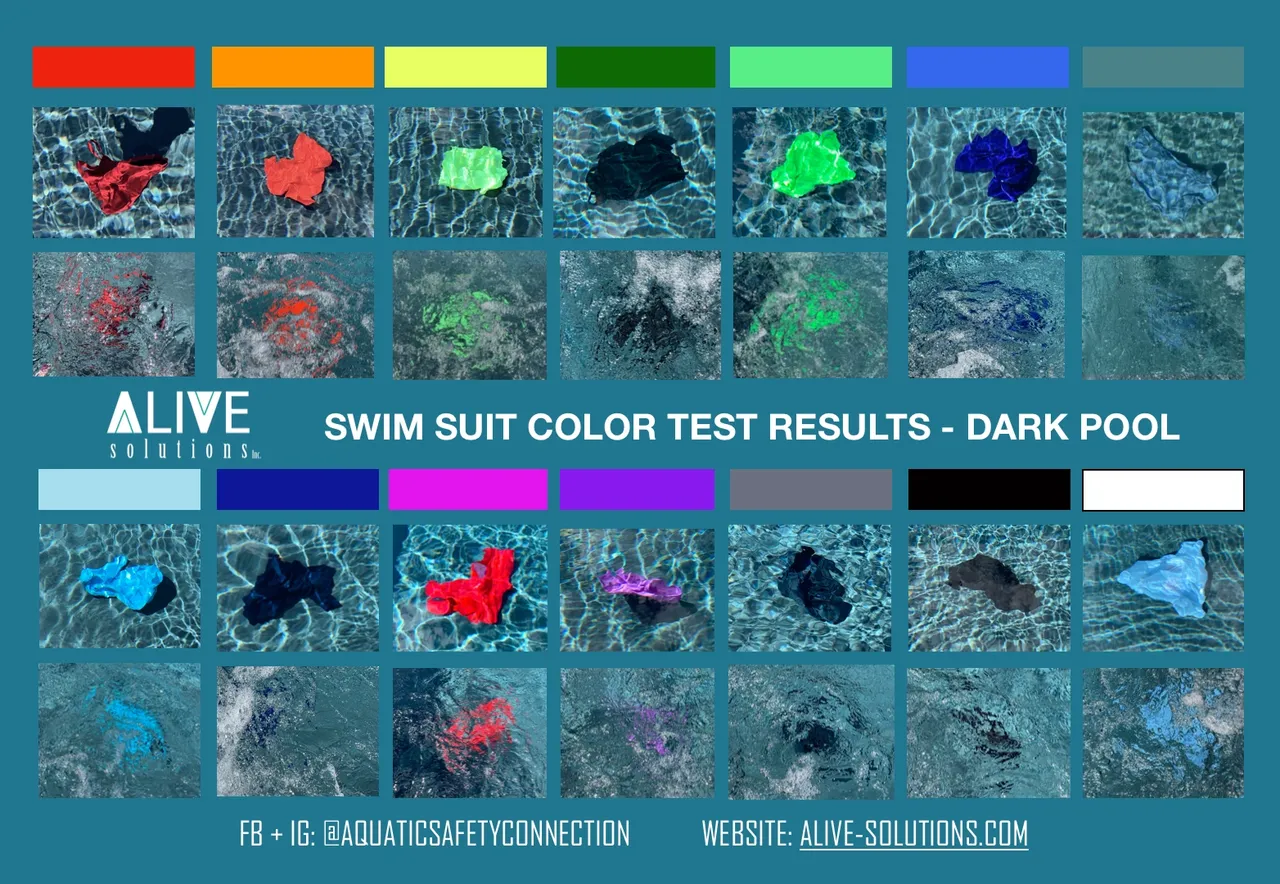
I'm not going to lie: I've always found it annoying this in July (yes, when everyone swims) because it's the height of pool season and staff are already incredibly busy. So, rather than create a whole week's worth of events (exhausting), your low lift this week might just be sharing the original viral image from Alive Solutions on social media.
Bathing suit color is a huge part of drowning prevention.
Here's everything else I've been reading this week.
Alice Ferrari: 11-year-old girl dies after hair was sucked into swimming pool pump while on holiday in Italy
Kudos to the staff for responding as quickly as they did, but it doesn't take long to experience catastrophic brain damage while deprived of oxygen. This source is in Italian, but appears to show photos of the actual basin.
Girl in serious condition following wading pool incident
I'm thinking of the staff involved in this incident - the photos in the article are absolutely heartbreaking.
High River Aquatics Centre reopening pushed to November
Federal grant funding half of Ravensong Aquatic Centre upgrades
What pool closures in Canada mean for health
A short piece from the Canadian Medical Association Journal for use in public health advocacy.
Citizens upset Weyburn pool project moving forward without community engagement
New urban spa to bring Nordic environment to city's core
'All of a sudden boom! It just blows up': Central Florida lifeguard survives lightning strike
City set to draft MOU with Carleton for new aquatic centre, Olympic-size pool
I grew up in Ottawa, Canada's capital. We were lucky to have access to three 50m/Olympic pools in a city of under a million people: uOttawa, Carleton University and the Nepean Sportsplex. I'll be 40 this year, so unsurprisingly, the pools are rapidly approaching a lifecycle crisis.
Detroit Residents Demand More Outdoor Pools Amid Limited Public Swimming Options
Britons among at least 60 tourists hospitalised after swimming pool pump leaks at Costa del Sol hotel
Police confirm participant in Across the Lake Swim died Saturday
City closes outdoor pools and adjusts recreation programs due to poor air quality
Roswell grandmother charged in drowning death of 2-year-old boy at clubhouse pool, police say
Calif. Dog Daycare Facility Pauses Operations After Dog Drowns
You can see photos of the "pool" on the business' Instagram account.
The rise of ‘safety fatigue’ among parents
"Dr. Edith Bracho-Sanchez, a mother of two and pediatrician, finds the loudest voices in parents' social media feeds are rarely the most qualified ones."
France recorded 131 drowning deaths since June 19 amid heatwave, minister says
Lastly, I'm always reading different articles about how to be a better business owner. I'm pretty decisive, but I know some pool managers really struggle with a maximalist approach of looking at every possible factor for far too long, so I loved this framing tool by Steven Claes:
A fair test here is simple. Does the extra time improve the decision?
Thanks for being here, I appreciate you.
Katie Crysdale
Lakeview Aquatic Consultants LTd.
PS. Submissions to our anonymous advice column came be made here
PPS. The audio version of last week's newsletter, where I talk about why International Lifeguard Appreciation Day is NOT the best way to recognize staff, is available here.